
Key Takeaways (TL;DR):
- While the flu and colds share some common symptoms, the flu hits faster and harder than a cold, often causing high fevers, severe body aches, and extreme exhaustion.
- If you can still manage to work from home, you likely have a cold; if you are bedridden by fatigue and fever, it is likely the flu.
- The flu can lead to severe complications like pneumonia or sepsis, especially for children under 5, seniors over 65, or those with chronic health conditions, and can sometimes be fatal.
- Handwashing, cleaning surfaces, and masks prevent both flu and colds; however, the annual flu vaccine is the best way to reduce influenza severity.
- Antibiotics do not work on either illness because they are viral, not bacterial; instead, focus on rest and hydration, and seek immediate medical care if you experience “red flags” like difficulty breathing or dehydration.
During the pandemic, the flu didn’t get a lot of attention, and for good reason— COVID-19 was at the forefront. Although the flu is not a trivial illness, the precautions that everyone took to avoid COVID were also effective in preventing the spread of flu.
Since the pandemic ended, influenza (flu) and other respiratory diseases have been on the rebound. And while it can often be mistaken for a bad cold, the flu can actually be fatal in severe cases.
Here’s how to tell the difference between a common cold or the flu, plus steps you can take to prevent getting infected, and what to do if you do happen to get sick.
About The Common Cold
Colds are respiratory infections caused by any one of over 200 different types of viruses.
In fact, cold viruses spread year-round, causing most adults to come down with 2-3 infections each year. In most cases, the common cold is not nearly as serious as the flu.
Rhinoviruses are the cause of most colds
The most common group of cold-causing viruses are rhinoviruses. Rhinovirus infections are usually fairly mild, lasting only a few days, with characteristic symptoms including:
- Sinus issues
- Sore throat
- Coughing
- Sneezing, and
- Low-grade fever.
The most frequent complications caused by colds are middle ear and sinus infections.
Coronaviruses and RSV can cause more serious symptoms
Some groups of viruses that cause cold symptoms, such as coronaviruses and RSV, can be much more serious. These types of viruses cause the bad colds that people often mistake for the flu.
In severe cases, both RSV and coronaviruses can lead to:
- Bronchitis
- Pneumonia, or
- Complications in patients with chronic medical conditions such as pulmonary or heart disease.
In the worst cases, these viral infections can require hospitalization and may even be fatal.
About The Flu
Like a cold, the flu is a contagious respiratory disease that can easily spread from person to person. There are four types of influenza viruses: Influenza A, B, C, and D.
In an average year, approximately 75% of flu cases worldwide are caused by Influenza A, while 25% are from Influenza B. Influenza C is less common, and Influenza D doesn’t infect humans.
When is flu season?
In the United States, most influenza infections occur seasonally, during the months of the school year, with peak flu season between December and February. Influenza A generally dominates at the beginning of flu season, and Influenza B surges in the later months.
Symptoms of the flu
While an influenza virus can cause all the same symptoms as the common cold, flu symptoms tend to develop suddenly and are more severe. People with the flu are more likely to experience:
- High fever
- Muscle aches
- Headache
- Exhaustion and
- Severe fatigue
Notably, the flu usually lasts up to two weeks – longer than a cold, and is more likely to cause additional complications in children under 5, senior citizens, pregnant women, individuals who have chronic health conditions, or those who are immunocompromised.
Complications from the flu can include pneumonia, heart attack, or severe inflammation that leads to sepsis, all of which can be fatal.
How many Americans get the flu, and do people really die from it?
Each year, 12,000 or more Americans die from the flu or its complications. And in the worst flu years (such as 2017-18), the deaths of more than 50,000 people in the U.S. were attributed to the influenza virus. Eighty-five percent of the most severe cases and deaths from influenza occur in people over 65 years old.
In most years, less than 10% of American adults and up to 30% of children will become infected with the flu. The majority of people who get the flu recover in 1-2 weeks.
How to tell the difference between a cold and the flu
Telling the difference between a cold and the flu can be surprisingly difficult because they share many overlapping symptoms (such as fever, coughing, and fatigue). In addition, both types of infection can range from having no symptoms at all to becoming life-threatening.
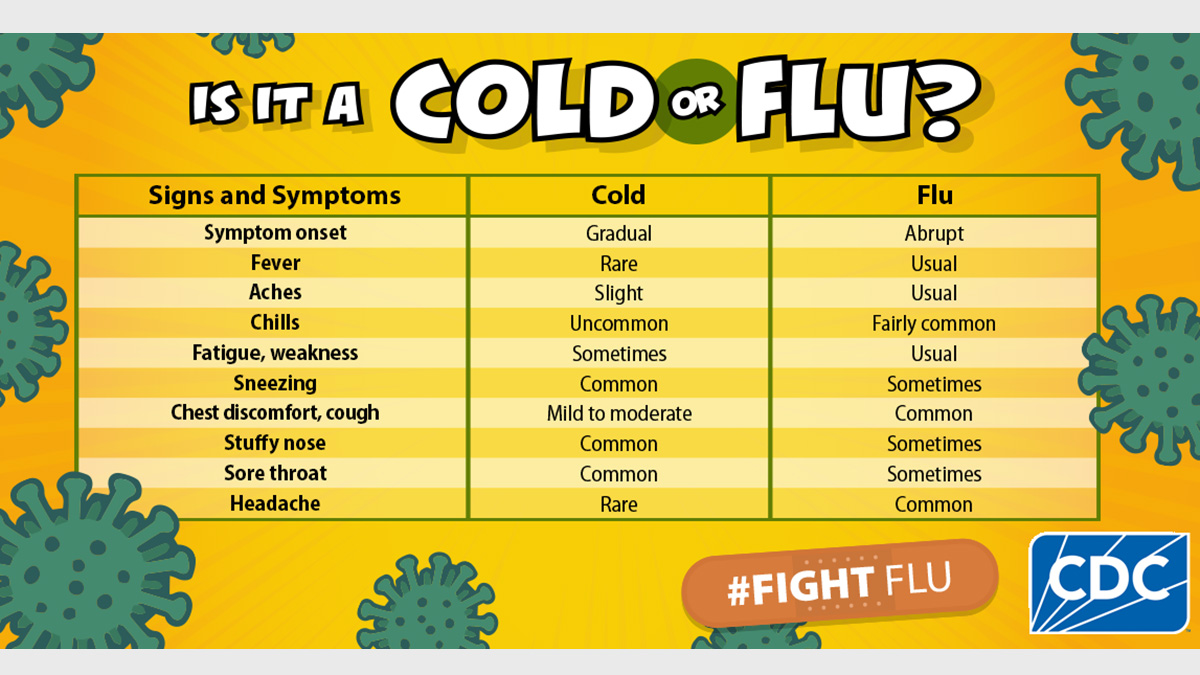
But in general, when a patient does start to experience flu symptoms, they usually come on more quickly and with greater severity than the common cold.
Consider this scenario: If you are sick but still capable of working from home, you probably have a cold. If you have a high fever, body aches, and severe fatigue, you likely have the flu. (In both cases, we recommend you don’t go to work and infect your colleagues or other members of the community.)
Fortunately, differentiating between a cold and the flu is rarely necessary. Prevention and treatment approaches for both types of infection overlap just as much as their symptoms do.
Before we discuss prevention and treatment tips, here’s a simple graphic from the CDC comparing cold vs flu symptoms:
Preventing cold & flu infections
With both colds and the flu, viral particles are spread by respiratory droplets that become airborne when a person speaks, sneezes, or coughs. Others who come into close contact with infected people can inhale these virus-containing droplets and catch the virus.
In addition, touching surfaces contaminated by viral particles can also lead to infection.
Ways to avoid getting sick with a virus
There are things you can do to avoid getting sick. A few simple daily practices can greatly reduce the risk of catching a virus:
- Avoid close contact with infected people
- Wear a mask to reduce your level of exposure to airborne viral particles
- Wash hands frequently
- Regularly clean high-touch surfaces like doorknobs and light switches to reduce surface contamination.
Also, getting vaccinated for influenza every year reduces your risk of flu infection, and minimizes the severity of illness if you do end up getting the flu.
And although there’s no vaccine for the common cold, staying up to date on flu and other vaccines can actually reduce the frequency and severity of colds, too.
Since it’s impossible to completely avoid viral exposures in daily life, making healthy lifestyle choices such as:
- Eating well
- Exercising, and
- Getting enough sleep
can also help keep your immune system in fighting shape to fend off any viruses that come your way.
Which patients are most at risk of complications from colds and flu?
Patients who are at higher risk for complications from viral infections – including children under age 5, adults over age 65, and individuals who are pregnant or have chronic conditions like asthma, diabetes, heart/kidney disease, or weakened immune systems – should err on the side of caution and seek medical attention sooner.
Moreover, it’s especially important for high-risk patients to stay up to date on vaccinations and talk to a healthcare provider about prevention and treatment options before they become ill.
Treatments: should you feed a cold, and starve a fever?
The best remedies for both cold and flu viruses are plenty of rest and fluids. Hot liquids, such as soup or tea, can help soothe a sore throat. Chicken noodle soup – or any other nutritious food – has the same benefits regardless of which virus you are fighting.
In fact, fever and pain medications, such as acetaminophen or ibuprofen don’t actually fight the infection but are useful for relieving some symptoms. Because both colds and flu are caused by viruses, antibiotics (which fight bacterial infections) are useless, and can have long-term negative effects when used unnecessarily.
Prescription antiviral medications, such as Paxlovid or Tamiflu are available for COVID-19 and for flu infections, respectively. These are most effective when started early.
However, since most cases of cold and flu will resolve on their own with time and rest, antiviral medications are usually only practical for high-risk patients, such as the elderly or those who are immunocompromised.
If you do come down with a virus, reach out to your primary care provider’s office to ask which treatment is appropriate for you.
When to seek immediate medical care
Patients who have a cold or flu virus and take a sudden turn for the worse may be developing complications, and should see a healthcare provider as soon as possible.
Severe symptoms such as:
- Difficulty breathing
- Persistent fever, or
- Dehydration
are red flags that signal a need for immediate medical care, such as a visit to urgent care or the ER.
Where to get medical help
If you’re at risk for viral infections, are suffering from a cold that won’t quit, or your case of the flu has taken a turn for the worse, call your WWMG primary care provider’s office with your concerns. We offer a limited number of same-day appointments on weekdays, and can direct you to urgent care or emergency care services if needed. We’re here to help you get and stay healthy.
For patients with severe symptoms, or if you need care after hours or on a weekend, visit your closest urgent care clinic or go to the ER.